
How Do We Read Scripture?
Reading Scripture in the Wesleyan Tradition (3)

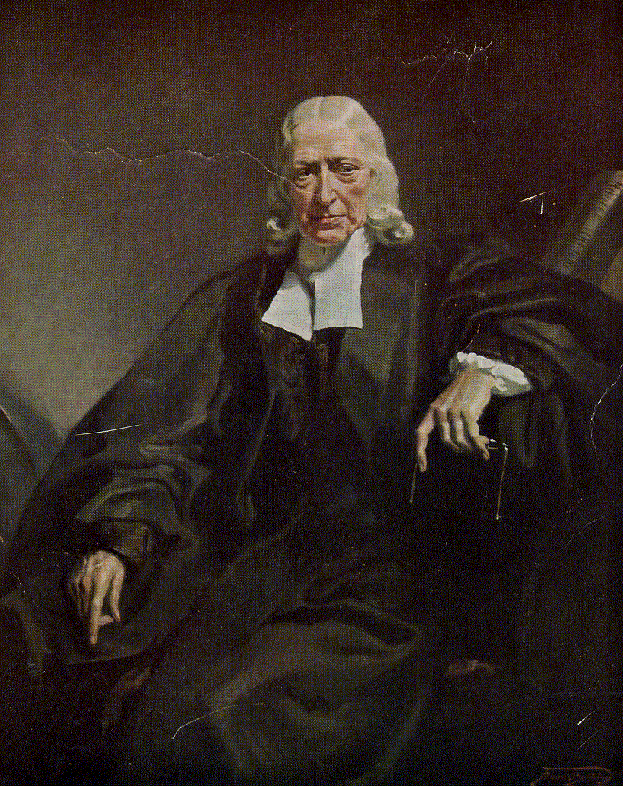
What Scripture is, what Scripture is for, and how we read Scripture—these are tightly interwoven concerns (even if they are often segregated in college and seminary curricula). During the Spring 2026 semester, I’ve been thinking about these issues in the context of discussions with wonderful students at United Theological Seminary, Dayton, Ohio. In this three-part series, I take up each of these questions. Here is Part One. And here is Part Two. This is Part Three.
For some background and bibliography on a Wesleyan theological hermeneutic of Scripture, see here.
Marks of a Wesleyan Reading of the Bible
What are the features of a Wesleyan theological hermeneutic of Scripture? What distinguishes a Wesleyan reading?
(1) The Plain Sense Is Primary—but This Is a Historically and Theologically Formed Plainness.
Wesley consistently privileges the “literal” or “plain” sense of Scripture, and he will correct even celebrated commentators when he judges that they are exegetically mistaken (e.g., when he declares that certain readings have “no shadow of foundation in the text” [“The Wedding Garment” §3]). However, Wesley’s plain or literal sense overflows the boundaries of modern ideas of “literal” (such as “just as it is written” or “the text’s straightforward meaning”).
See my earlier essay, “What Is ‘the Literal Sense’”? A Chapter in the Discussion of Biblical Interpretation.”
On the one hand, his plain sense is the result of hard work—e.g., attention to the original languages, interests in rhetoric and genre and audience, questions about sociohistorical context, and consideration of the entire canon of Scripture. This means that, for him, the literal sense refers to the grammatically, literarily, canonically, and historically disciplined meaning of the text (resisting, say, free-wheeling allegorizing). From this vantage point, the plain sense is sufficient, so that what Scripture addresses plainly, the interpreter is given no basis for altering or evacuating, say, through spiritualizing moves.
On the other hand, as with other premodern (and some early modern) interpreters of the Bible, the plain or literal sense is the theologically shaped meaning of the text. Whereas early theologians might work out this theologically formed sense of Scripture with appeal to Scripture’s hypothesis (that is, its overarching narrative framework) and scopus (that is, its aim, which is Christ), Wesley spoke of the general tenor of Scripture. And the content of that general tenor is explicitly soteriological.
In his Explanatory Notes on the New Testament, Wesley defines what governs faithful reading as “that grand scheme of doctrine which is delivered therein, touching original sin, justification by faith, and present, inward salvation” (note on Rom 12:6). Because the Sache of Scripture (to use Barth’s language: the stuff, the substance, the business of Scripture) is, for Wesley, Trinitarian, Christological, and oriented to the salvific journey, any and all scriptural texts may speak plainly or literally to the Three-One God, to Christ’s person and work, and to the way of salvation. Because they name what Scripture really is about, these are not alien intrusions into the text; they are not examples of eisegesis.
(2) Scripture Interprets Scripture
For Wesley, no text is read in isolation. This is true to such a degree that we and our contemporaries may find his sermons baffling since they start with one text before moving to another and another. This reading habit is on display, too, on practically every page of his Explanatory Notes. This is not only because Wesley is so intimate with the whole of Scripture, right down to Scripture’s very words and phrases, but it also exemplifies a deliberate interpretive strategy.
Wesley’s constant move is intertextual triangulation. So, for example, disputed terms are defined by canvassing the whole canon, one text explains another, and apparent contradictions among passages are resolved by attending to the whole of Scripture. His is a form of canonical interpretation in which the meaning of any particular text is shaped by its home within the scriptural whole.
One way to make sense of Wesley’s approach is with the notion of simultaneity. Belief in simultaneity sets aside interest in how the biblical materials came to be (different authors, different contexts, different times, etc.), substituting instead an affirmation that the Scriptures now form an indissoluble unity. Just as today’s readers of Romans and Galatians might move back and forth between these Pauline letters, working with the assumption that both are written by the same person and take up similar theological concerns, so Wesley works with an understanding that, behind the human authors stands the authorizing voice of the Divine Author, so that all biblical voices speak at the same time and of the same reality.
(3) The Animating Work of the Holy Spirit
As we have seen, Wesley’s comment on the “natural person” is basic to his hermeneutic (see “Necessarily Pneumatological,” here). The natural person “has not the will, so neither has … the power” to receive spiritual things. Accordingly, faithful interpretation cannot be reduced to good technique or appropriate method. It is the Spirit’s gift to those who are being inwardly transformed.
A Wesleyan hermeneutic is irreducibly pneumatological. The same Holy Spirit who was dynamically involved in the formation of scriptural texts is now dynamically involved in their right interpretation. Wesley puts this with characteristic conciseness in the Preface to his Explanatory Notes upon the Old Testament: “scripture can only be understood thro’ the same Spirit whereby ‘it was given’” (§18). Accordingly, to read scriptural texts well, readers and hearers attend first, last, and always to their relationship with the Spirit.
It almost goes without saying, then, that scriptural texts that refer to the Holy Spirit should not be thought of as the raw materials for fabricating a sound doctrine of the Spirit. Rather, they describe what interpreters may experience right now.
We can speak, then, of a performative dimension to scriptural reading: Animated by God’s Spirit, the text is meant to do in the reader what the text declares.
(4) Reading along the Way of Salvation
Wesley’s soteriological hermeneutic emphasizes two immediate concerns.
First, a Wesleyan hermeneutic of Scripture finds that justification and sanctification are inseparably tied together as the soteriological grammar of the entire canon. This, we might say, is a persistent hermeneutical rule for Wesley, so that any reading that sunders faith from repentance or holiness is, by definition, a misreading of Scripture. Note, for example, his remarkable claim in his Explanatory Notes on 1 Peter: “He that treats of faith and leaves out repentance, or does not enjoin practical holiness to believers, does not speak as the oracles of God.” Accordingly, any reading that finds its end, say, in antinomianism has taken a wrong turn. The whole of Scripture, rightly read, holds free grace and responsible holiness in permanent tension.
Second, a Wesleyan hermeneutic of Scripture finds that holiness—which he defines variously, but often as unflagging love of God and neighbor—is the teleological horizon of interpretation. Wesley seems to bend every reading toward the crucial, pastoral question: How do believers become wholly holy? This means that the renewal of the imago Dei, the perfection of love, having the mind of Christ, comprises the interpretive horizon that governs what counts as a faithful reading. Interpretations that fail to illuminate the path toward a thoroughgoing double-love are, in the best case scenario, incomplete, and, in the worst case, badly mistaken.
This soteriological horizon is central to Wesley’s analogy of faith, and he defines its content with care. “Let us prophesy according to the analogy of faith,” he writes—“according to that grand scheme of doctrine which is delivered therein, touching original sin, justification by faith, and present, inward salvation. There is a wonderful analogy between all these; and a close and intimate connexion between the chief heads of that faith ‘which was once delivered to the saints’” (Explanatory Notes, on Rom 12:6). Elsewhere he identifies the same analogy as “the connexion and harmony there is between those grand, fundamental doctrines, Original Sin, Justification by Faith, the New Birth, Inward and Outward Holiness” (Explanatory Notes on the Old Testament, Preface §18).
The analogy of faith is not, for Wesley, a generically doctrinal lens; it is a specifically soteriological one. For Wesley, the deep grammar through which all Scripture is to be read is the grammar of salvation—the grace-enabled journey from original sin, through justifying faith and new birth, to holiness of heart and life.
This means that a Wesleyan hermeneutic is teleological rather than merely descriptive or procedural. The goal of interpretation isn’t realized simply or reductively in textual understanding, but in the transformation of the faithful.
(5) The Structure of Salvation
One cannot speak of the way of salvation in Wesley without taking up, too, this characteristic feature of his hermeneutic: his Arminian commitments to free, resistible grace and the synergistic coordination of divine and human activity. It isn’t too much to say that these commitments shape his reading of virtually every contested passage on election, predestination, and grace. These convictions function as hermeneutical lenses through which to see, as well as hermeneutical pressure to address theologically, what predestination and election mean, what grace does, and whether human response is real or illusory.
Wesley’s soteriological distinctiveness becomes visible in comparison with the Reformers. Where Reformed interpreters might read the relevant texts through the lens of limited atonement and unconditional election, Wesley reads them in light of a universalism of opportunity—grace that is prevenient (genuinely enabling response) but not irresistible, and redemption that is available to all. Faith and works are synergistic. The possibility of apostasy is genuine, and warning passages are read at face value. Wherever the text permits, Wesley reads salvation as an economy in which God’s prior action and human response are both fully real. A reading that evacuates either pole misreads the text.
What is at stake here cannot be reduced to, say, different doctrinal conclusions on disputed points. It reflects a different hermeneutical grammar—one in which the resistibility of grace, the reality of human response, and the goal of sanctification together constitute the lens through which the whole canonical witness is brought into focus.
(6) The Aim of the Bible and the Aim of Interpretation: Ecclesial and Formational
A Wesleyan reading persistently takes as its horizon the community of believers being formed for holy living in the world. This is the Wesleyan tradition’s version of what contemporary students of theological interpretation of Scripture refer to as an “ecclesial” or a “formational” reading of Scripture. The text is addressed to a community, received by a community, and oriented toward producing in that community the kind of holy, engaged, mutually accountable life Wesley called social holiness. Personal edification matters, but it is always nested within the communal. The goal of interpretation is the community of disciples, together, sharing the mind of Christ.
Wesley’s emphasis on what we might call orthokardia—right-heartedness, the love of God shed abroad in believers’ hearts by the Holy Spirit—names what distinguishes a methodist (that is, a Wesleyan) reading from aiming only at doctrinal correctness (orthodoxy) or appropriate behavior (orthopraxis). These two, orthodoxy and orthopraxis, Wesleyans share with other Christians. A reading of Scripture that is genuinely Wesleyan presses further, contributing to the formation of believers who “love the Lord their God with all their heart, and with all their soul, and with all their mind, and with all their strength” (The Character of a Methodist §5). Doctrinal fidelity and moral faithfulness matter—but they find their proper ground and center in transformed affections, in “tempers” (as Wesley put it—that is, dispositions, character qualities, inner nature) that have been reoriented by grace. Scriptural engagement, for Wesley, is a means of grace precisely because it is the Spirit-enabled channel through which holy tempers are cultivated within and among Christ-followers.
(7) Imperative and Promise: Two Sides of the Same Coin
A distinctive and theologically significant reading habit for Wesley is his refusal to hear commands as merely demanding. When he reads “Thou shalt love the Lord thy God with all thy heart,” he hears simultaneously a divine assurance that God will work this love in believers. Explicit commands are implicit promises. God enables what God requires. This means that the ethical demands of Scripture are never moralistic (as if the reader or hearer must simply try harder), but are always grounded in and enabled by prior and accompanying grace. Christian formation isn’t heroic self-achievement. It’s always grace-enabled, grace-filled.
What about the “Wesleyan Quadrilateral”?
Since its articulation in the 1960s, the “Wesleyan Quadrilateral” has become widely known for its four-sided framework for theological reflection—drawing on four “sources”: Scripture, Tradition, Reason, and Experience. How does this relate to Wesley’s theological hermeneutic of Scripture?
In the most general sense, we might say that what would later be called “the Wesleyan Quadrilateral” can be discerned in Wesley’s reading practices—but only in the most general sense!
See my earlier essay, “What to Make of the So-called Wesleyan Quadrilateral? It’s (Past) Time to Sunset an Idea.”
A careful reading of Wesley’s sermons and notes shows that experience is not for him an authoritative source. Yes, he refers to the experiences of Christ-followers past and present, but he does so by way of corroborating the message of Scripture, not to compete with Scripture or to replace it.
Yes, he engages with tradition in his work with Scripture, but his doing so is highly selective. Often, his references to tradition counter interpretations for their lack of support in the text of the Bible. More positive uses of tradition are typically grounded in Wesley’s commitment to the ecumenical creeds (the Apostles’, the Nicene, and the Athanasian) and the Anglican Articles of Faith. Patristic tradition, the Church of England, and, occasionally, Reformed confessions sometimes serve for him as guardrails against novel readings of the Bible. Accordingly, Wesley can cite traditional readings when they corroborate the text and correct them when they obscure it.
And, yes, Wesley employs reason, as seen especially in his concern with coherence across the Scriptures. He reasonably explains why the text’s demands make sense and disciplines the interpreter against absurd or contradictory readings. He draws on natural philosophy to elucidate a text. But he doesn’t use reason to do battle with Scripture, nor does he allow reason to adjudicate Scripture’s authority.
Accordingly, none of these latter three—experience, tradition, and reason—carries independent authority. Their role is exhausted in their serving Scripture.
What Is a Wesleyan Theological Hermeneutic?
The seven marks I have enumerated can be discussed one at a time, but, in fact, they are inseparable. For Wesleyans, they help to articulate a single, coherent, hermeneutical vision. They aren’t independent steps in an interpretive process.
We recognize that Wesley never laid out his theological vision in just this way. There’s no Wesleyan hermeneutical manual. This is true even though he was capable of articulating hermeneutical guides from time to time, such as in his sermon “New Creation”; when it comes to reading Revelation, he writes, we ought “to go as far as we can go, interpreting Scripture by Scripture, according to the analogy of faith” (§2).
In fact, Wesleyans read in Wesleyan ways less by having a checklist to ensure they “do it right” (or “follow such-and-such a series of steps”) and more by allowing their formation as Wesleyans to have its way when they come to Scripture.
Wesley himself modeled this. When he described the early Methodists in his sermon, “On God’s Vineyard,” he insisted that they were people “of one book”—with “one, and only one, rule of judgment, with regard to all their tempers, words, and actions; namely, the oracles of God” (§I.1). Again, the word tempers is heavily freighted: For Wesley, tempers signify the deep dispositional patterns that govern how we imagine the world; they are formed by and catalyze our words and actions. A Wesleyan hermeneutic shapes not merely what readers conclude about a text, then, but the dispositions—the tempers—they bring to Scripture and that Scripture forms in them. This is the coherence beneath the seven theses: Scripture is the Spirit-animated means by which the God of all grace forms a people wholly given over to this double-love—love of God, love of neighbor.
Adopting and practicing this hermeneutic today is more difficult than it might first appear, given modernity’s axiomatic declaration that interpreters disallow the influence of any authority over their reading of the Bible—including, maybe even especially, the authority of ecclesial traditions and personages. Moreover, postmodernity’s counter to modernity’s incense-burning at the altar of so-called scientific neutrality has been centered above all on “reading from this place”—with “this place” defined in social, economic, political, gender-related, racial and ethnic, decolonial or postcolonial terms. Rarely, though, is “this place” defined in ecclesial terms, or theological.
What would it look like to untie the hands of Wesleyans so that they, we, might engage in a pneumatologically enabled, canonically governed, soteriologically centered reading of Scripture, the telos of which is the formation of holy people in a holy community, through grace that is both free and transformative, and never one without the other?
Well, that was quite something! And appreciate. I sometimes feel that trying to get a theology correct causes a loss of the dynamic flow needed for sanctification. I particularly liked your comments around holiness in it's various forms. Whether "social" or Great Commandment, the action and idea also invite the attributes of "ambassadors of Christ" and Kingdom of God. Thanks for the post.
I’ve wondered about something: concerning #2.
If scripture interprets scripture - and with it, we read individual texts in light of the entire canon - what are the implications for our hermeneutics and “ontology of the Bible” (sorry, couldn’t think of a clearer way of saying it) when a later scriptural interpretation of an earlier text is NOT, well, a “good” interpretation — grammatically, literarily, soteriologically?
For example, I find the Jephthah narrative within Judges to be condemnatory toward him and the entirety of pre-monarchy Israel. I hold this interpretation both because of the individual narrative of Jephthah AND its place as the near-climax in Judges’ circle of moral/theological shenanigans.
Then, I read that Jephthah is listed among the heroes of faith in Hebrews. And I find that to be utterly hermeneutically and soteriologically problematic.
And yet, that’s how scripture interprets scripture.
What would Wesley or a Wesleyan interpreter do with that?