
What Is Scripture For?
Reading Scripture in the Wesleyan Tradition (2)

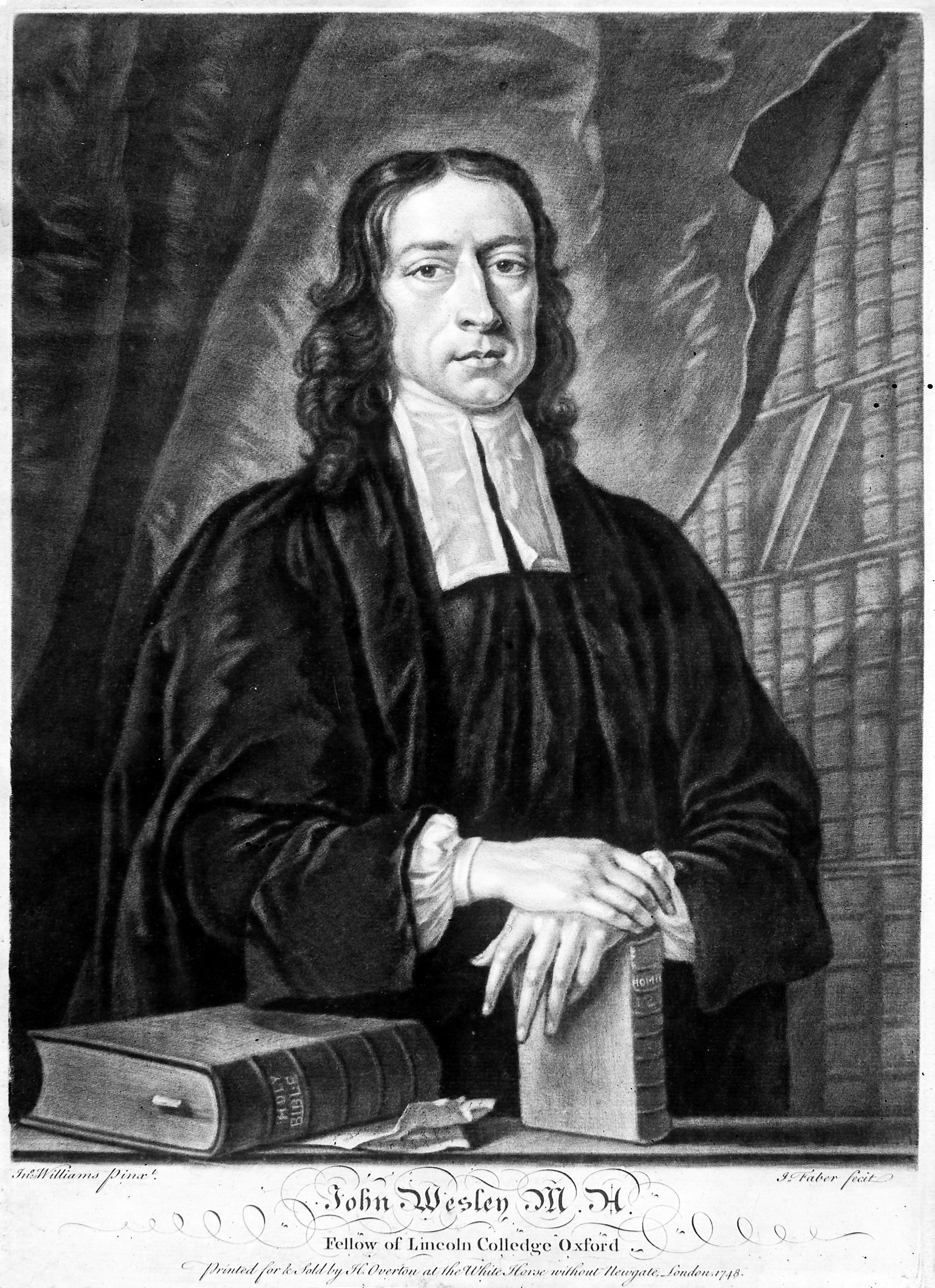

What Scripture is, what Scripture is for, and how we read Scripture—these are tightly interwoven concerns (even if they are often segregated in college and seminary curricula). During the Spring 2026 semester, I’ve been thinking about these issues in the context of discussions with wonderful students at United Theological Seminary, Dayton, Ohio. In this three-part series, I take up each of these questions. Here is Part One. This is Part Two.
For some background on a Wesleyan theological hermeneutic of Scripture, see here.
The Role of Scripture
For Wesleyans, as for Wesley, Scripture is a means of grace. Among Wesley’s instituted means, Scripture occupies a singular position. His is a functional-teleological account of Scripture’s role. This is far more descriptive of Wesley’s thought than (simply) saying something like Scripture is “authoritative” or “primary.”
What does this mean concretely?
Soteriological and Sanctifying
Wesley identifies the telos of scriptural reading as showing “the way to heaven.” This is clearly a reference to humanity’s eternal salvation (and, in fact, for Wesley, the salvation of the entire creation). But it’s also a reference to salvation in this life—that is, it refers to the way of salvation, the way of holiness, the salvific journey. Scripture isn’t given primarily to (e.g.) settle doctrinal disputes or provide historical information, but to bring people to saving faith and to form them in holiness. Every other function is subordinate to this.
Accordingly, Wesley’s engagement with Scripture—say, in his sermons and Explanatory Notes—leans in the direction of questions like these: What are the ramifications of this text for those who receive it in faith? How does this text promote the formation and transformation of the faithful into greater Christlikeness, to have the mind of Christ, to embody and practice love of God and love of neighbor?
In short, Scripture’s role centers on the sanctification of God’s people.
A Channel, and Norm, of Grace
Scripture is unique among the means of grace as both a channel of God’s merciful and empowering presence (say, like prayer or the Lord’s Supper) and the normative framework through which genuine grace is rightly comprehended. Among the appointed means of grace, this dual function finds a home singularly in Scripture. Scripture mediates the Spirit’s transforming presence and provides the moral-theological framework by which divine grace is distinguished from all counterfeits.
What counterfeits? Wesley struggled especially with two: antinomianism and enthusiasm. Against such fraudulent substitutes, Scripture shows us what genuine grace looks like, what it requires, and how it is distinguished from pseudo-graces.
Against enthusiasm, Scripture norms against mistaking experience for divine revelation; experience confirms the promises of Scripture but doesn’t serve as an independent authority that bypasses, runs ahead of, or works to displace Scripture. Against antinomianism, Scripture counters what Bonhoeffer later called “cheap grace,” as though salvation might be reduced to forgiveness apart from genuine transformation of heart and life.
Grace really is divine grace when it looks like what Scripture—illuminated by the Holy Spirit, read plainly, read as a whole, received in faith—looks like, and this entails forgiveness and transformation, renewal of the divine image, the movement from justification to sanctification, love of God and love of neighbor.
Irreducibly Ecclesial and Communal
Wesley’s hermeneutic places engagement with Christian Scripture within a community of discernment that is especially local and historical. We might press him on how this hermeneutical community might be extended globally, but his sensibilities already include the public reading of Scripture across socioeconomic lines, and the public and private reading of Scripture in conversation with the larger church, not least the early church. Guided by the Holy Spirit working through the gathered community—this understanding of scriptural inspiration militates against any view that Scripture might somehow be abstracted from the church that receives it.
The Bible is a resource for individual and family devotion, but also, and especially, the common possession of the faithful community whose formation it cultivates and enables. This social or communal form of scriptural reception (e.g., Wesley’s extensive small group polity, as well as the prominence of Scripture in liturgy and sermon) is integral to how Scripture does what it does.
This means that the hermeneutical home of Christian Scripture is the Body of Christ, in assemblies of Christ-followers traveling together along the heavenly way, the way of salvation.
Necessarily Pneumatological
Scripture’s work isn’t automatic or mechanical. Its work isn’t first and foremost about right technique or interpretive method. There is no Wesleyan meaning-making machine.
Consider Wesley’s note on 1 Cor 2:14:
The NRSVue: Those who are unspiritual do not receive the gifts of God’s Spirit, for they are foolishness to them, and they are unable to understand them because they are spiritually discerned.
The AV: But the natural man receiveth not the things of the Spirit of God: for they are foolishness unto him: neither can he know them, because they are spiritually discerned.
Wesley’s Explanatory Notes: But the natural man—That is, every man who hath not the Spirit; who has no other way of obtaining knowledge, but by his senses and natural understanding. Receiveth not—Does not understand or conceive. The things of the Spirit—The things revealed by the Spirit of God, whether relating to his nature or his kingdom. For they are foolishness to him—He is so far from understanding, that he utterly despises, them. Neither can he know them—As he has not the will, so neither has he the power. Because they are spiritually discerned—They can only be discerned by the aid of that Spirit, and by those spiritual senses, which he has not.
This is a profound epistemological claim. From Wesley we have this persistent claim that the Holy Spirit is both the agent who enables hearing and reading and the one who animated the writing in the first place. As Wesley writes in his note on Scripture’s inspiration (2 Tim 3:16): “The Spirit of God not only once inspired those who wrote it, but continually inspires, supernaturally assists, those that read it with earnest prayer.”
Accordingly, the spiritual condition of readers and hearers is hermeneutically relevant—indeed, not only relevant but crucial. A “natural person” cannot receive the whole of what Scripture offers. Scripture’s role in promoting the renewal of God’s image and pressing the faithful further along the salvific journey is realized in the context of the Spirit-reader/hearer relationship.
The hermeneutical home of Christian Scripture is the Body of Christ, which receives it in faith, and for whom Scripture serves as the Holy Spirit’s assistant (or auxiliary or adjutant) in the sanctification of God’s people.1
This is a purposeful gloss on 2 Tim 3:16: “Every scripture is inspired by God and is useful for teaching, for showing mistakes, for correcting, and for training character, so that the person who belongs to God can be equipped to do everything that is good” (Common English Bible). In formulating this claim, I have learned from Daniel Castelo and Robert W. Wall, The Marks of Scripture: Rethinking the Nature of the Bible (Grand Rapids: Baker Academic, 2019), 1–16; my language parallels theirs.
Loving this series of posts - them you. And...
"As Wesley writes in his note on Scripture’s inspiration (2 Tim 3:16): “The Spirit of God not only once inspired those who wrote it, but continually inspires, supernaturally assists, those that read it with earnest prayer.”"
My personal view of Scripture and inspiration is very parallel to this. So I have always added a disclaimer in discussions with others about this that my view was not quite orthodox. Turns out, maybe I'm not a Baptist, but maybe a Methodist! 😁