
What Scripture Does: Wesley and the Limits of Inerrancy Language
Toward a Wesleyan Understanding of Scripture

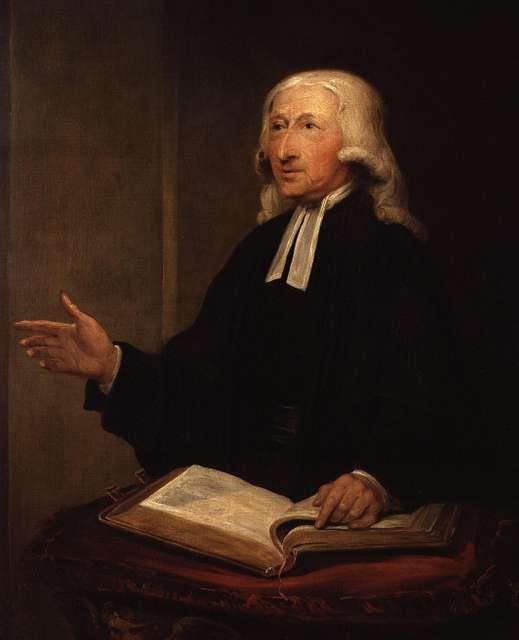
Whenever Christians argue about the Bible, there’s a good chance they’re actually arguing about different things. That’s one reason the argument can be so frustrating.
One side wants to demonstrate that Scripture is trustworthy and authoritative. The other concerns itself more with working out what is needed for faithful interpretation. Both can miss what the other side wants to say. The result is that some folks spend lots of energy on the question: Is the Bible without error? Or: Is the Bible infallible?
What I want to urge is that there’s a more pressing question (well, two interrelated questions): What does the Bible do? How do we receive it faithfully?
For a Wesleyan response, we have solid resources, even if we sometimes overlook them.1
What Wesley Was After
Anyone familiar with John Wesley’s body of work will know that he held the Bible in the highest esteem. For example, his Explanatory Notes upon the New Testament—dense, down-to-earth, pastorally oriented annotations prepared for ordinary Methodist readers—shows someone who spent his life in the text. He attended carefully to the Greek, traced connections across the canon, pressed on issues of grammar, and read with relentless pastoral intentionality. No one who spends time with those Notes could doubt his intimacy with and deep reverence for Scripture.
But what Wesley pursued in his engagement with Scripture is telling. He wasn’t mounting defenses of historical precision. He wasn’t building a theory about the metaphysical properties of the text. What he attended to, page after page after page, was a particular, orienting question: What does this text do in and for readers and hearers who receive it in faith?
That’s hardly a low view of Scripture! Arguably, it’s a higher view than what inerrancy or infallibility frameworks tend to offer. That’s because it makes Scripture far more consequential in a far more challenging sense.
Wesley framed his approach in the preface to his Explanatory Notes upon the Old Testament: “Scripture can only be understood through the same Spirit whereby it was given.” Similarly, his concise note on 2 Tim 3:16 has it that “the Spirit of God not only once inspired those who wrote it, but continually inspires, supernaturally assists, those that read it with earnest prayer.”
In other words, Wesley’s doctrine of Scripture is, at its root, pneumatological. The Spirit who animated the composition of these texts is dynamically at work in their faithful reception and interpretation. A Wesleyan account of Scripture’s authority begins and ends here—not with a theory of errorlessness but with the dynamic work of the Spirit in a community being formed toward holiness.
As Ken Collins puts it, Wesley understood Scripture as a means of grace2— positioned as a channel of divine presence (like prayer or the Eucharist) and, uniquely, as the norm by which all claims to grace must be rightly comprehended. Scripture, for Wesley, holds together the Spirit’s transforming presence and the law’s illuminating function. The telos of all scriptural reading, for Wesley, is entire sanctification. Any reading that doesn’t bend in that direction has taken a wrong turn, whatever its theory of inspiration.
This matters when we consider Methodist theologians who used the language of the Bible’s freedom from error—such as nineteenth-century figures like Ralston, Wakefield, and Pope. These writers deserve a hearing, but they also deserve critical scrutiny. After all, they were writing in a world shaped by the inerrancy debates catalyzed by the likes of Charles Hodge, B. B. Warfield, and the Princeton tradition. Do these Methodist theologians represent an authentic development of Wesley’s own hermeneutical instincts or does their work constitute a later echo of or accommodation to a Reformed theological culture that was increasingly setting the terms for accredited orthodox discourse in American Protestantism? That isn’t a trivial question.
To think of Wesley as an “inerrantist” before the concept itself was formalized is to read Wesley through a framework that Wesley’s own practice neither requires nor supports. That’s because his high view of Scripture rests on a functional ontology: Scripture is the sole, binding norm of faith and life because it is the Spirit-animated instrument through which God creates and forms the people of the way of salvation. Again, this is a genuinely high view. The question it poses isn’t: Does this text contain errors? Instead, the central question is this: How does this text, enlivened by God’s Spirit and received in faith, form us in holiness?
The Problem with “Without Error in All It Affirms”
The phrase “without error in all it affirms” has become the preferred formulation in a wide range of “evangelical” contexts3—and it’s worth asking whether it actually does the work it claims to do.
Nearly a half-century ago, Robert Johnston published his book, Evangelicals at an Impasse: Biblical Authority in Practice.4 His diagnosis centered on what he then regarded as the evangelical crisis over Scripture, and his remarkably clear-eyed account continues to exercise explanatory power today.
Johnston observed that figures like Francis Schaeffer (1912–1984) and Harold Lindsell (1913–1998) had conflated three distinct commitments, namely, biblical authority, inspiration, and a particular secondary theory about the result of inspiration. By treating the third commitment as the test of the first one, these evangelicals reversed the proper order. “Inspiration” is the theological tenet that grounds scriptural authority; the claim of “without error” is a potential inference from inspiration, not its foundation. To make errorlessness the watershed is therefore to confuse a possible test of evangelical consistency with the test of evangelical authenticity.
But Johnston’s more penetrating observation is that the entire inerrancy debate, precisely because it focused on a theory about the text’s properties, masked the real crisis, which was hermeneutical. The pressing question wasn’t: Is the Bible without error? The question, instead, was: How do we interpret the Bible faithfully and consistently? Drawing on Geoffrey Bromiley’s (1915–2009) work, Johnston poses the problem with real simplicity: If the Bible is infallible and authoritative, but there are different possibilities of interpretation, where is one to find that which is infallible and absolute?
This is exactly the problem with “without error in all it affirms.” The phrase shifts the weight of its claim onto the qualifier—and that qualifier is entirely hermeneutical. What does the text affirm?
To answer this question seriously, folks talk about, say, literary genre, ancient conventions, canonical context, and the like. We shouldn’t miss what’s happening here. The actual regulatory work in the formula now rests on hermeneutical questions, not on property claims about errorlessness. The formula turns out to mean something like this: When you interpret the text correctly, it says what is true. That is a substantive claim, but it’s hermeneutical in nature (even if it comes to us dressed up as a property claim about the text). As Johnston saw clearly, once the hermeneutical questions are fully in view, the property claim isn’t doing much work, and only seems to have eclipsed the harder, more consequential work of faithful interpretation and reception.
There is a further issue with the “infallibility” language that often accompanies or substitutes for “without error.” The distinction between the two is, in practice, narrow at best. Both locate Scripture’s authority primarily in a claim about the text’s properties—its freedom from error and/or its inability to mislead. Both invite a posture of apologetic defense: Establish that the text is reliable and authority follows. This is almost precisely the inverse of Wesley’s own posture toward Scripture, which began not with defense but with receptive formation, not with the text’s properties but with what the Spirit does with and through the text in the life of the believer and the praying community.
There’s a reason why Johnston concluded that the real crisis in evangelical theology wasn’t theoretical but practical. It was the inability to translate an ontological theory of Scripture’s authority into the concrete practices of faithful communal interpretation. For Wesleyans, what is needed is not a better property claim but a better account of how the community of faith reads Scripture under the guidance of the Spirit toward the end of salvation. And this is precisely the focus of Wesley’s interests and practice.
A More Genuinely Wesleyan Position
If “without error in all it affirms” is not the most illuminating or most Wesleyan way to express a high view of Scripture, what is?
The older, Evangelical United Brethren (EUB) language—which focused on Scripture’s revelation of God’s Word “so far as it is necessary for our salvation”—frames the question in functional-soteriological terms. It commits Wesleyans to the position that, in the hands of the Holy Spirit and received in faith, Scripture genuinely forms and governs the community’s life toward what I might call integral salvation.5 It grounds authority where Wesley grounded it, in Scripture’s unique sufficiency as the Spirit-animated means through which God accomplishes the work of redemption and sanctification. It also has the enormous advantage of being methodist language,6 reminiscent of the Articles of Religion (“Holy Scripture containeth all things necessary to salvation”), rather than language borrowed, whether from Princeton or from Lausanne—that is, language appropriated from traditions whose accounts of grace, human agency, and the Spirit’s work differ in sometimes consequential ways from our own.
Johnston’s constructive proposal in Evangelicals at an Impasse points in the same direction. He argued that evangelical theology at its best is a dynamic, prayerful, communal engagement of Scripture, tradition, and contemporary witness—with Scripture as the decisive authority, but tradition and contemporary insight as contributing partners in interpretation. That proposal is, in fact, reminiscent of Wesley’s own practice. (Does Johnston, of the Evangelical Covenant Church, sound like an anonymous methodist?) Wesley read Scripture through the analogy of faith, in conference with the church fathers and the Reformers, in conversation with the natural sciences, with a constant pastoral eye toward the spiritual conditions of his own time.
A Wesleyan statement capturing this spirit—speaking of Scripture’s unique authority and sufficiency in the way of salvation, the ongoing work of the Spirit in illumining it for the believing community, and the necessity of faithful communal interpretation and reception—would be more distinctive, more demanding, and more theologically honest than a doctrine organized around a vocabulary of errorlessness.
Conclusion
What Wesleyans need is not a better property claim about the Bible. We need a richer account of how the community of faith reads Scripture under the guidance of the Spirit, toward the end of salvation.
Johnston was right to call for the concrete working out of biblical authority in the practice of communal interpretation, formation, and discernment. Wesley knew and practiced this—this Wesley who read Scripture with care and intimacy, who held it as the sole norm of faith and life, who submitted everything—including experience, reason, tradition, and his own pastoral instincts—to its authority, and who understood Scripture’s authority as fundamentally functional and pneumatological, oriented toward the formation of a holy people.
That is a high view of Scripture, a view that makes the Bible consequential in the most serious sense—not a book to be defended but a living instrument of grace through which the Spirit of God forms and reforms the community of those living out their allegiance to Jesus Christ. This is what Wesley knew and practiced.
The question before Wesleyans is not whether we should hold Scripture in high esteem. This almost goes without saying. The question is whether “without error in all it affirms” is the best, most coherent, most Wesleyan way to express that esteem. I think the answer is no—and, further, I believe our tradition offers something richer. That richer thing isn’t a doctrine centered on Scripture’s properties but an account affirming Scripture’s power: the power, through the Spirit, to cultivate holiness, to propel the faithful along the way of salvation that finds its telos in God’s redemption of God’s people and, indeed, the whole cosmos.
This is an abridgement of my essay, “A More Excellent Way: Wesley, Scripture, and the Limits of Inerrancy Language,” published on 2 June 2026 in Firebrand—my response to an exchange between Scott Kisker and Matt O’Reilly regarding a proposed new article on Holy Scripture. See Scott T. Kisker, “The Global Methodist Proposed Article on Holy Scripture: A Critique,” Firebrand (18 May 2026); Matt O’Reilly, “Global Methodists and Holy Scripture: A Response to Scott Kisker,” Firebrand (26 May 2026).
Kenneth J. Collins, “Scripture as a Means of Grace,” in Wesley, Wesleyans, and Reading Bible as Scripture, ed. Joel B. Green and David F. Watson (Waco, TX: Baylor University Press, 2012), 19–32.
I place the word evangelical in quotation marks because, in contemporary usage, the term is increasingly devoid of its earlier theological center (especially David Bebbington’s emphases on Scripture, cross, conversion, and activism) in favor of sociopolitical characterizations.
Robert K. Johnston, Evangelicals at an Impasse: Biblical Authority in Practice (Atlanta: John Knox, 1979).
I use the Spanish term integral to signify the all-encompassing or comprehensive significance of salvation. Samuel Escobar and René Padilla are credited with introducing the phrase misión integral (“wholistic mission”) through their work with the Fraternidad Teológica Latinoamericana and, then, at the 1974 International Congress on World Evangelization (Lausanne). Cf. René Padilla, Misión Integral: Ensayos sobre el Reino de Dios y la Iglesia, 3rd ed. (Buenos Aires: Kairos, 2015). I use this term to disallow attempts to imagine that, by “salvation,” the later Wesley understood anything less than salvation in its fullest sense—extending into a Christian life of holiness and the renewal of the cosmos.
I deliberately use the lower-case “m” in “methodist” to include the various theological and ecclesial traditions that trace themselves back to Wesley, rather than any particular “Methodist” instantiation of the Wesleyan tradition.
Honestly, I am just reeling at how close this is to the argument I'm making in response to a Firebrand magazine piece by one of my seminary colleagues. Reading you say the things I'm writing - though obviously in a different voice - is super affirming. I feel like maybe the Spirit is in the work I'm doing. So thank you for allowing the Spirit to do the work in you!
I like this a lot. We are struggling to say something substantive about the Bible. Your essay hits on what is the most important thing.