
How Shall We Then Live?
The Biblical Narrative and the Contemporary Church

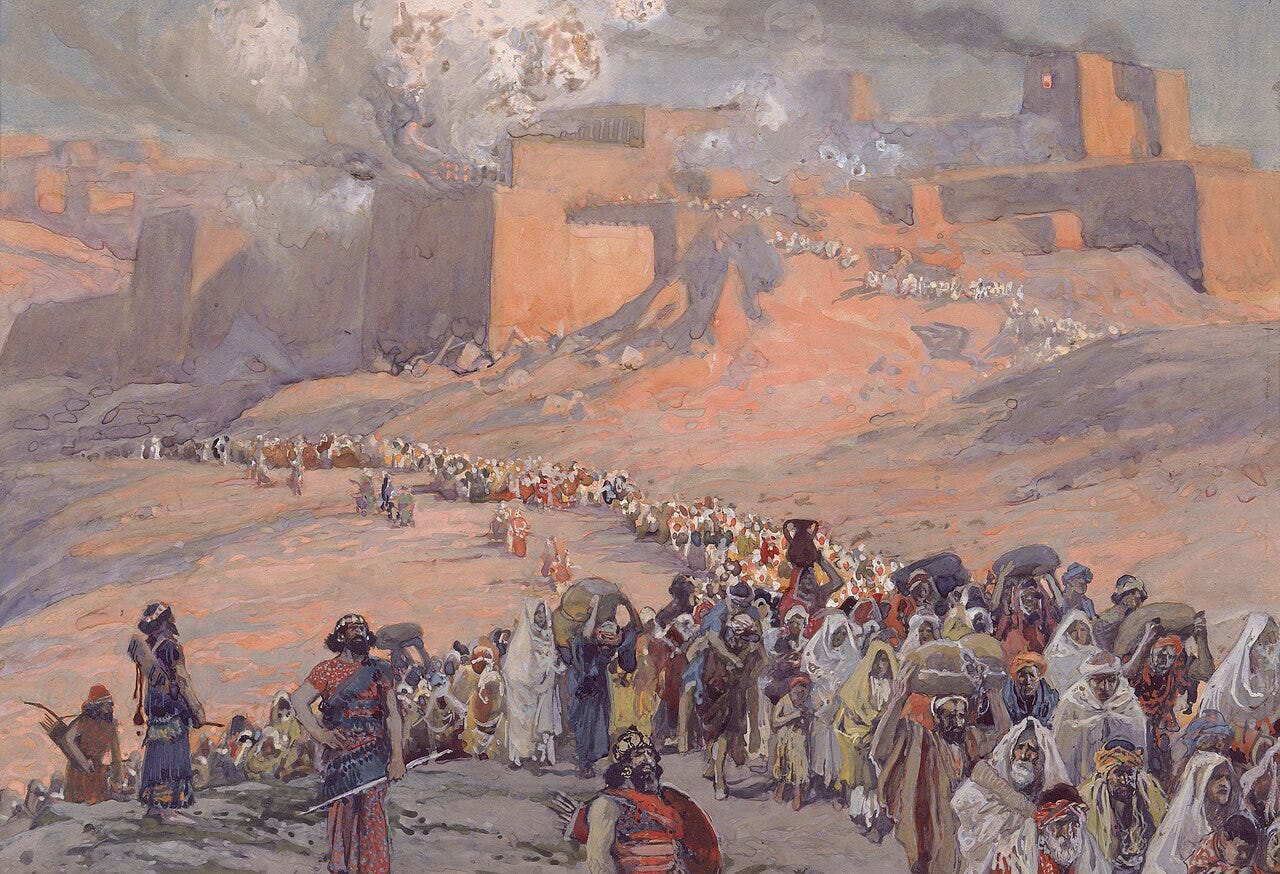

From time to time, I recall an earlier presentation that still has something to say. This is one of them—a response to the question of how Scripture’s grand story bears on the shape of faithful life today. I’ve turned that bare-bones outline into something closer to prose. The bones are still there, and so is the challenge. Maybe you’ll agree with me that we haven’t aged out of the question posed to me, the question that provoked my reflections, back then.
God’s Royal Rule … in This Place
“If anyone is in Christ, there’s a new creation. Everything old has passed away. Look! Everything has become new!” (2 Cor 5:17 AT)
Given the grand story of God—given the world-changing reality of God’s work in Christ—how shall we then live?
That question can’t be answered in the abstract. The kingdom of God is never “the kingdom of God” in general. God’s kingdom isn’t merely theoretical. It isn’t shackled to the ozone layer….
It’s always the kingdom of God in some particular circumstance, some particular community, some particular set of pressures and temptations. God’s royal rule encompasses all of time and space, but gets expressed, and embraced, in every here and now. Think of E. Stanley Jones, the American Methodist missionary to India, who championed indigenous expressions of God’s kingdom, expressions that wrestled with and respected Indian culture and spiritual traditions. The point, of course, is that this the work of local communities of Christ-followers everywhere: discerning what God is up to, getting in sync with God’s royal rule right there and then, and finding ways to serve God’s kingdom in word and practice.
For this kind of work, we need a starting point, and the canon-logic of the New Testament hands us one. It moves from Gospel to Epistle, from the seismic shift of Jesus’s advent to down-to-earth, contextual instruction from Paul, James, and the others. Look! There’s God’s kingdom, Jesus says. See and respond…
Reflecting in storied terms about God’s kingdom helps, not least because of a perennial problem in how the church handles the Bible and life. Too often we treat Scripture piece-by-piece, atomistically, pulling individual texts loose from the larger story that gives them their force. (Have you heard, “A verse a day keeps the devil away”?!) But Scripture wasn’t written as a manual of detached maxims, or a book with new recipes on each page. It was written, and is best read, as narrative formation for the community of God’s people.
What, then, does it mean to inhabit the story of God’s kingdom. What plot lines carry us forward? Challenge us? Shape our responses to what God is up to?
Finding a Starting Place
Narratives, for Aristotle, have a beginning, a middle, and an end. This narrative—the biblical story of God’s royal rule—runs from Creation through Exodus and New Exodus to Eschaton. (See here.) In principle we could enter that story anywhere. But where we enter shapes everything about how we read the rest.
Let’s start at the end.
From the end, we can engage in backshadowing—that is, we can explore how the end casts its shadow backward on the beginning, and on the present. Scripture portrays the future realization of God’s agenda as a given that determines, in a global sense, the range of possibilities and the significance of all that comes before it.
I recognize that backshadowing may be an unwelcome concept. Many of us want to construct our own futures. We tend to live as though a good future depends on our own best efforts, our own ingenuity, our own striving, our stratagems.
And our institutions—civic, economic, even ecclesial—often try to demonstrate their importance by presenting themselves as the embodiment of the future for which we yearn.
Scripture’s narrative logic cuts against such instincts. The future isn’t up for grabs, at least not in any ultimate sense. Nor is the future something we’re building from scratch. Where time and history and life are headed has already been disclosed, and that already-been-disclosed gives meaning to and shapes faithful life now.
Who Does God’s Future Call Us to Be?
If the end of the story is already given—if God’s future presses backward into our present—then here are some commitments that follow.
(1) Embrace the life of an exilic people.
God’s future—we aren’t there yet.
This life is marked by temporality. When biblical texts use phrases like “time, times, and half a time,” whatever else they’re saying, they’re declaring that present reality isn’t forever reality. It’s limited. It’s pro tem. It’s ad interim.
This present arrangement isn’t all there is. So, for us, the present ought to be marked by progression, by journey.
It’s also marked by a strong sense of identity and otherness. Hence, we are perpetually confronted with questions like: Who is us? Who is them? What allegiances and practices distinguish us?
Our otherness complicates our status in the world. Simple assimilation or simple withdrawal—these options really won’t do. The besetting temptations run in both directions—a cancerous acculturation that erodes distinctiveness and a defection that abandons engagement altogether.
Identity and discipline go together: the import of “purity,” the call to an alternative community, the nagging question of how we measure success and by whose measure we’re measuring, and more. Life in exile resists collapsing into either assimilation or world-denying retreat. A kingdom-serving presence in the world—that’s the harder and more faithful path.
(2) Sit loosely among the powers that gain approval in this world.
If the wider world, whose patterns so often run against the ways of the crucified-and-raised Messiah, approves of our character, our claims, our communities, our projects, what does that say about us? About our deepest allegiances and practices?
After all, we live in Babylon, not Jerusalem. Recognition of this reorients the question of allegiance: To whom do we extend our most intimate loyalties? And on what basis? Are these determined by national boundaries? Social standing? Ethnic identity? Economic interests?
Think about it like this: For us, Jesus’s admonition to seek first God’s kingdom isn’t really a matter of ranking the kingdom as “priority one” among other competing priorities. It’s not like we can pray and read Scripture, or participate in worship, at the beginning of each day or each week, then get on with life. God’s kingdom isn’t simply the top item on an otherwise ordinary list. God’s kingdom takes over. God’s kingdom determines everything else. It relativizes the whole list, and it becomes the barometer by which to assess what is and isn’t “approved.”
(3) Engage in (even risky) witness.
A people on the way is, by definition, a people of witness. That means remembering to tell our true story. It means taking seriously the work of critical historiography. By this, I draw attention to the reality that all history-writing is purposeful, agenda-ridden. And, sometimes, maybe lots of times, the ways we tell the stories of our pasts shape us poorly.
What does history-telling do? It does the work of identity-formation, pedagogy, and legitimation—all at once. Accounting for how God’s future gives significance to our past is therefore a central point of discernment.
The question is where God’s story is taking us—and, then, how we align ourselves with that story and, then, how we relate that story to others. What does it look like to get in sync with what God is up to?
We might ask, then: To what degree do we recognize that we are standing on a battleground of dueling stories. For example, there’s the story the world tells about power and security and approval. There’s the story of independence, of pulling ourselves up by our own bootstraps. There’s the story of need or scarcity that can only be addressed through hostility, through taking what others have. And there’s the story of the gracious God who embraces us in our lack. There’s the story the gospel tells about the crucified Christ. What story shall we live? What story shall we live? Note well: In a world of dueling stories, we may find ourselves at risk.
(4) Discern the commitments and dispositions that beg for faithful embodiment.
If Rev 7 portrays an end-time gathering of countless people from every nation, tribe, people, and language, all singing, “Victory belongs to our God, who sits on the throne, and to the Lamb” (7:10 CEB), then what might the present look like? Are we not, or shouldn’t we be, a multilingual, multinational, multiethnic community?
Our local lives are inexorably bound up with the whole of the cosmos; the butterfly effect isn’t just a metaphor. Some examples:
A cosmic perspective isn’t optional. In ways that genuinely count, I have more in common with Christ-followers in Colombia and Poland and North Korea than our language and political and economic differences might portend.
Extending the cosmic image, it’s also true that we live more and more as one world, for better and worse, by way of economic globalization. Extending further, we’re depositing far more carbon into the atmosphere than the earth’s systems can absorb. The list goes on.
Simply put, we cannot think only of “me and mine.” And so…
Faithful embodiment means defining power and its practices in the way of the lion who is a lamb—not the lion who is merely king.
“Thou shalt not steal”—it’s actually a community-defining ethic, not a private one; it’s about our not taking as our own what God has given everyone.
Hospitality isn’t really a college degree or an industry or a committee. It’s a basic openness to the other—both as a basic disposition and as practice. It’s a posture, a way of being in the world.
A Story Still Worth Entering
Well, the pressures named here—like acculturation, the seduction of competing national and economic loyalties, the temptation to gain approval and measure success by the world’s metrics, and the people and ecological cost of business as usual—haven’t gone away. If anything they’ve sharpened. So that first question still presses: Given the story we’ve been written into, how shall we then live?